Why Every Millennial Should be Reading David Foster Wallace

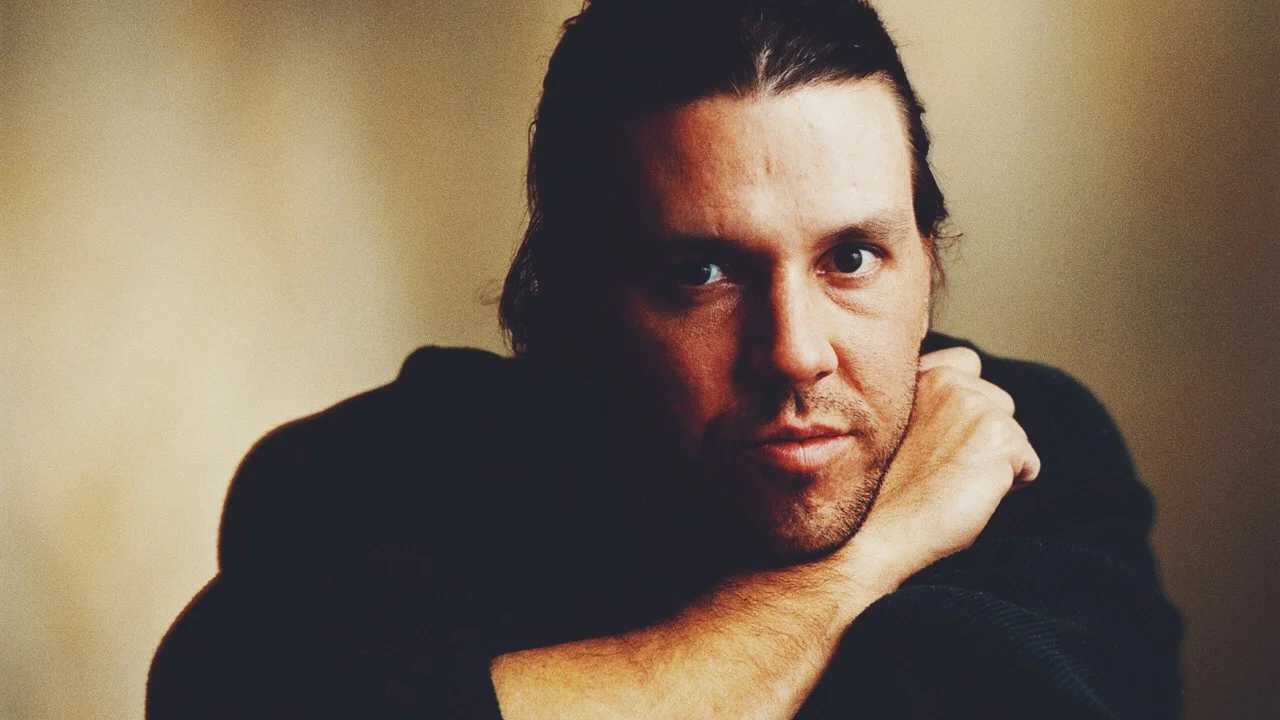
Readership for literature is dying. Statistics back the argument, and Im not here to argue against it. What I think could possibly be the problem is that young people are failing to find writers that speak to them. But Ive been a fan of one such writer that's spoken to me deeply and could possibly speak to many other millennials as well. The writer Im talking about is the late David Foster Wallace.
In the history of Literature, it's easy to pinpoint writers that reflect a certain era. Examples of this are Mark Twain during the late 1800s, F. Scott Fitzgerald during the Jazz Age, Jack Kerouac during the Beat Generation, and Thomas Pynchon during the counterculture of the late 1960s and early 70s. It could be possible that the reason it's hard for all of us to agree on one writer for our time is that there are actually a higher number of talented writers working the past few decades than ever before. Another reason is that our culture has become more fractured with the dawn of the internet, so its difficult for a writer to connect with a wide spanned readership. That could very well be true, but I still feel that there should be a writer that Millennials can unite undersomeone we can look to for wisdom.

First off, the themes Wallace explores are subjects that Millennials find important, such as entertainment, drugs and addiction, the environment, solipsism, politics and government, loneliness and depression in everyday American life, and relationships. Im sure many of you will find his work to be difficult, and let me assure you, its supposed to be. He believed modern entertainment was becoming too easily digestible, and that literature should be more demanding of its readers, as if it is exercising a part of our brains that other forms of modern entertainment are not engaging.

Here are some of his works that Millennials may find relevant to their lives right now:

Infinite Jest: This is considered his magnum opus. Cited by Time Magazine as one of the best english language novels since 1923. Millennials will find this novel relevant to them because it takes place in a world where entertainment and drugs have become so good, that people cant escape them. The novel is long and tough to read, but the reward for getting through it could be unlike any other reading experience youve ever had.
Consider the Lobster: A book of essays that touch on many subjects such as the porn industry, September 11th, talk radio, and Fydor Dostoevsky. The two essays that Millennials may find most interesting at this time are the title essay and Up, Simba about John McCains 2000 presidential campaign. Consider the Lobster is about his visit to a Maine lobster festival and many will think the essay is solely about animal rights, but I find it to be about how much of our own thinking is dominated by whats being marketed to us.


And for you recent graduates, Wallaces commencement speech at Kenyon College is one of the best: 

by Darin Milanesio

Image via Animal New York

It's a Good Day to Be Alive

Crazy things are happening around the world. We browse the internet and check our phones, and our feeds are flooded with headlines of seemingly incomprehensible conflicts, disasters, and disagreements. But if we can't relate to those in harms way, or are not being directly affected ourselves, then it's easy to turn our heads and think about other things. We'll simply choose to read about something more entertaining, explainable, and shareable. 

There's no harm in doing this; we consume media for many different reasons, some of which are good for our health. The silliest of content stimulates our creativity, makes us laugh, and even helps us live longer lives. Binge watching six second Vines isn't what's hurting us. The problem is the reason why some of us do this. 

Thinking sociologically

It can be daunting to read about a foreign crisis or governmental policy. We don't have enough time in the day to analyze everything that takes place around the world. Analysis is left to the experts, often for reasons of efficiency and accuracy. But if we don't even listen to what people are discussing, theorizing, and debating, we can fall into the "because" trap.

We've all heard that line: "Things just are the way they are, 'because'". But this is an insufficient answer for social phenomena- a lousy excuse for shutting down our critical, empathetic, and intellectual thinking capacities. If we haven't already, I hope that our generation can consciously begin approaching the news from a sociological perspective- considering the historical, environmental, political, and economic contexts of things in an effort to better understand our world. But perhaps what is even more important is that we place ourselves in other's shoes, and exercise empathy for the people and communities we read about every day.

Live every day like it's your last

Imagine yourself caught in the midst of a civil war. Your house has been obliterated by explosives, your siblings have disappeared, and you've lost your parents to illness and starvation. Or your hometown has been destroyed by a horrific tornado and your life has literally been turned upside down. You're alive, but others are gone. You have more days in your future, but your loved ones aren't so lucky.

It's gut-wrenching to think about tragedy, whether you've already experienced something like it or not. It gives one no pleasure to think about it, but practicing empathy gives us a reference point for evaluating our own lives, and contemplating the future for ourselves and others around us.

If we can live everyday like it's our last, then we can begin to appreciate our lives of ourselves and others on a more meaningful level. Of course, we can't spend every day lounging in paradise, chilling with friends, or eating our favorite food. So by living everyday like it's your last I don't mean YOLO- saying "screw it, nothing matters". What I'm trying to emphasize is that we search for the value in our lives- the reasons behind our actions, the importance and functions of the places we spend our time in, the love we have for our friends and family, and the underlying purpose that fuels our desire to live.

Technology as a means, not an end

It’s said that millennials treasure the value in things, but isn't it hard to do this when we’re always absorbed in our phones? We’re addicted to the rapid income of information. Some of it is baseless, and much of it is superficial. Media can easily cloud our ability to think deeply about a subject, or contemplate and discuss the significance of the events that are taking place worldwide.

So here and there, let's take a moment to disconnect from the rapidity of it all. Let's contemplate our own existence on this planet, and try to find the deeper meaning that underlies every single part of our lives: the food, the drink, the company, the friends, the events, the pleasures, the pains, and the good and bad times that we all have.

I challenge you to explore the underlying reasons of events, the origins of your feelings, and the ties of your relationships. Once we do this, we'll be able to authentically craft and articulate our life stories. Let's not live to share our lives on social media, let's live, and then share if we feel we must.

Striking a balance with technology

Despite talk of declining life satisfaction in our country, and abroad, technology has actually made life immensely easier and counteracts many of the economic woes we face. It's enhancing our quality of life beyond monetary and psychological measures. Not everyone has access to these technologies, but companies like Google and SpaceX are bringing them to the masses, and we can predict that the benefits will spread to a greater portion of our globe. Technology can't be shunned altogether, as it also connects us in unprecedented and wonderful ways. But, too much of anything can be bad, and we must make sure it doesn't devalue other aspects of our lives. 

If we realize that today is a good day to be alive, we will be able to strike that balance between technology use and traditional 'real-life' experiences. We’ll be able to not merely just see and hear about things that are happening around the world, but to have the presence of mind to think about their causes, effects, and implications. 

By examining our privileges, our disadvantages, our environment, and the effects we have on our peers, we'll be able to connect with people and ourselves, in deeper, more meaningful ways. Although we experience different emotions and activities and exhibit different cultures on this planet, we're all products of a shared human essence. Let’s tap into that thread that links us all together - that collective human strand - and find the meaning, passion, and importance in everything we do. Today is a good day to be alive.

by Charlie Stephens

Images via Unsplash

Tuck on Tap | Ballast Point Sculpin

The Beer

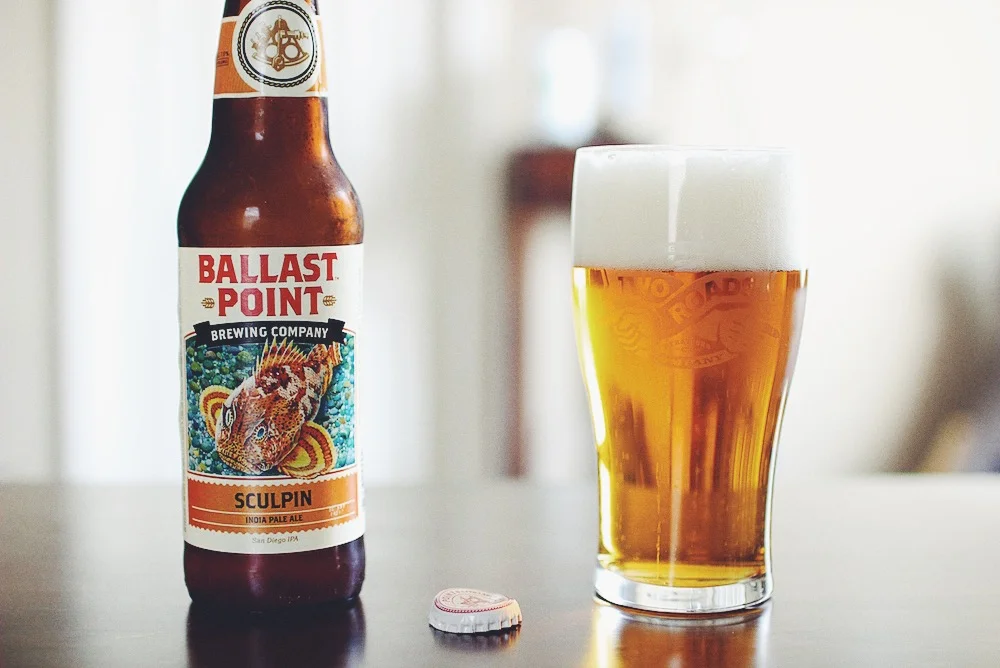
Sculpin IPA is Ballast Point Brewing Company's signature IPA - arguably their flagship beer. Crafted in the 'beer capital' of the world - San Diego - Sculpin IPA is a testament to humble beginnings and clever experimentation. It's a home-brew that's been both locally recognized and internationally awarded (It's won 22 awards including World Beer Cup’s Gold Medal for Best International IPA in 2010 and 2014).

The Design

As you peer at the bottle you see the image of a bright orange fish with spikes on it and you may wonder, “Why is this beer named after a Sculpin?” Well, it's an ocean fish with poisonous fins that pack a strong sting to anyone, or anything, that dares to challenge it. Sure, the beer is bold, and packs a good punch for those unfamiliar to bitter IPAs. But the Sculpin fish also has some of the tastiest fillets known to mankind. It's an appropriate analogy, for a perfect seaside brew.

The Experience 

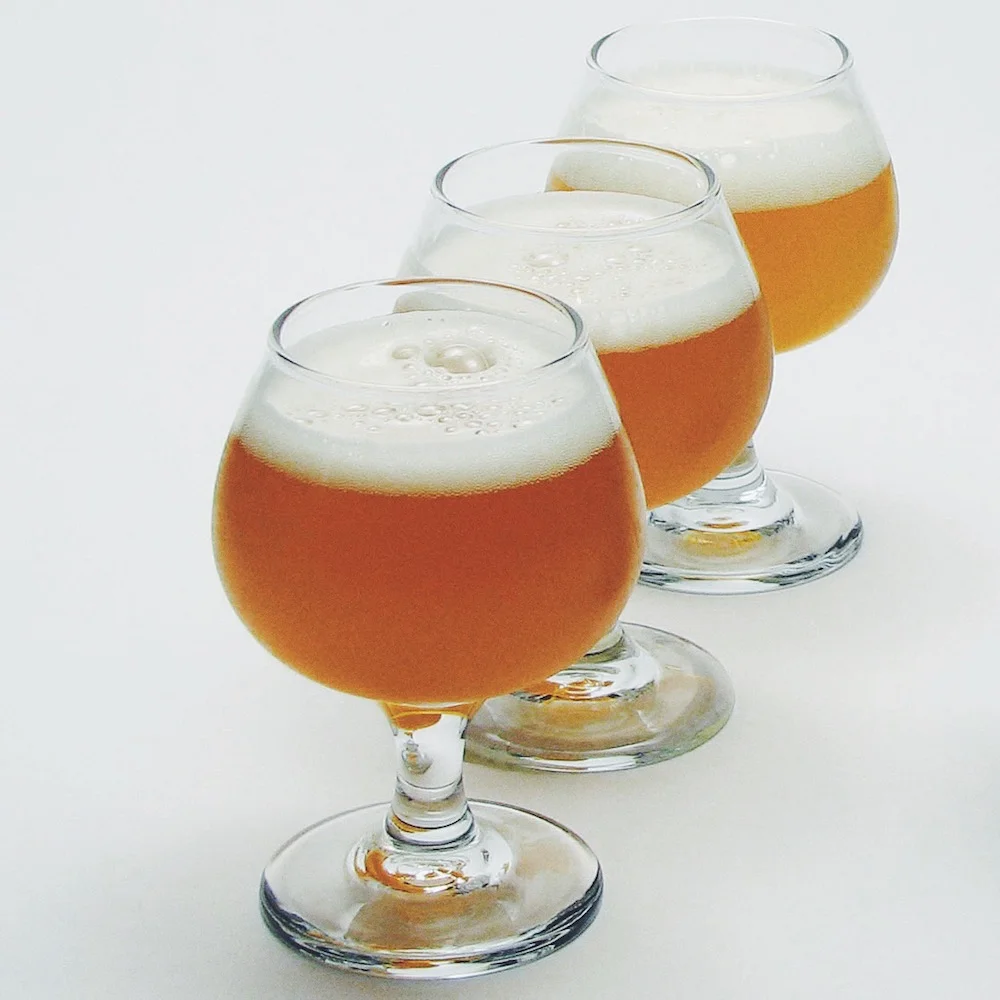
This beer such as other IPA’s is best to served into a tulip glass - this will enhance the experience. The shape of such a cup will let you smell all of the Sculpin's aromatic greatness, as your nose will sit right over the beverage as you consume it. 

The beer has clear amber-orange color with crisp white head, and it's filled with apricot, lemon, peach accents and flavors. It's flavor profile is creative, and the quality is prime.  “Hopped” at five different stages, the beer has a unique taste that goes unrivaled by any other challenger IPAs.* As you drink the beer the tropical flavors stand out, but wait a little bit and the Sculpin will “sting” you as it rolls down your drinking pipes. This beer is a perfect beer for a warm summer night, coming in strong at 7% ABV and tasty-bitterness of 70 IBU’s.

Varieties

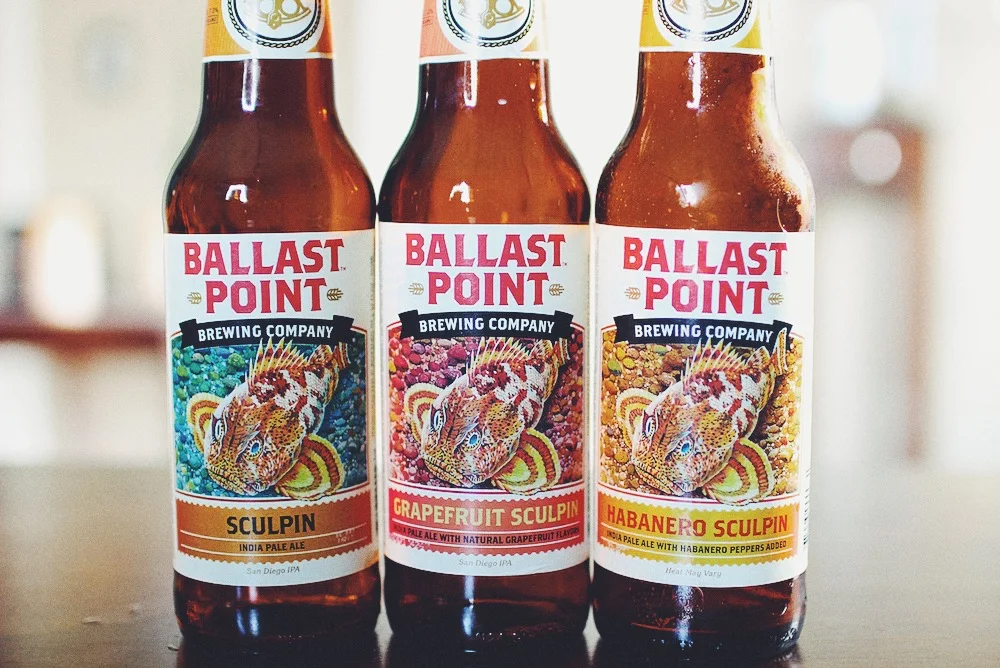
Also I would like Ballast Point as some unique twist on this flagship brew with the Grapefruit Sculpin and Habanero Sculpin. The Grapefruit Sculpin has a lighter fresher taste, and the Habanero is like drinking fire mixed with an IPA. Give these beers a try, for what is life without experiencing, and the Ballast Point Sculpin is a must-try for all lovers of great beer.

*Hopping refers to adding of hops to the brew batch throughout the brewing process. This helps enhance the bitter taste of the beer - most commonly found in IPA’s-  to mask the sweet malty taste of barley, and pungent smell to the beverage.

by Michael Tucker